A monitoring report is only as credible as the data behind it. Checking data before a report is approved is cheaper than correcting a report the client has already read. Make the check a required step, with its result recorded, not an optional review at the end.
Completeness
- Every planned tool was submitted for the visit.
- Interview counts meet the target, or the shortfall is explained.
- Required fields are filled in.
- Photos and supporting files are attached where the tool requires them.
Consistency
- Dates fall within the planned visit window.
- The recorded location matches the facility visited.
- Answers are logically consistent, for example no stock reported for an item marked as never supplied.
- There are no duplicate submissions.
Plausibility
- Outliers are investigated, not silently removed.
- Responses are not suspiciously identical across different interviews.
- Interview durations, where recorded, are realistic.
Evidence
- Photo location and time stamps match the visit.
- Photos show what the report says they show.
- No personal identifiers appear where the data protection policy forbids them.
Recording the result
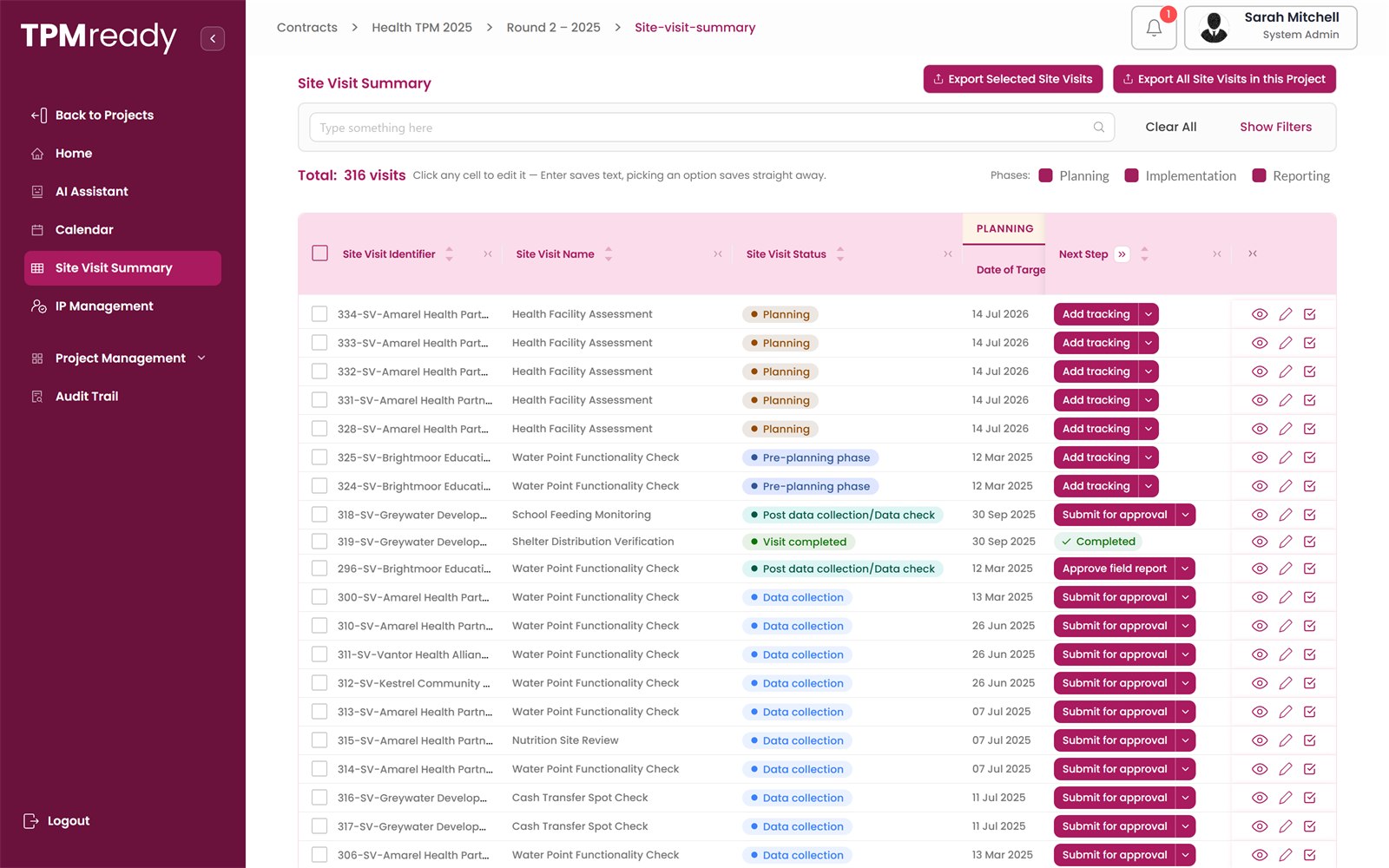
Record the outcome of each check against the visit, along with who carried it out. If the data fails, return it to the field team with specific comments rather than fixing it quietly; the correction then becomes part of the record.
Approval
Only after the data check passes should the field report go for approval. A named reviewer then approves the report or returns it with comments. Only approved visits should reach the client.